KEYWORDS
Seaweed, offshore, site selection, abalone feed, re-use of equipment
SPECIES
- Saccharina latissima (sugar kelp)
GOALS
- To develop improved offshore macroalgae production methods that are sustainable and cost-effective.
- To upscale sustainable, efficient, and low-cost offshore macroalgae production in the Faroe Islands.
- To utilise macroalgae for low-trophic species (for example, European and South African abalone) to improve and optimise feeding strategies.
- To make a feasibility study of offshore macroalgae production in new sites of the Atlantic Ocean with relevant kelp species.
GEOGRAPHICAL BOUNDARIES
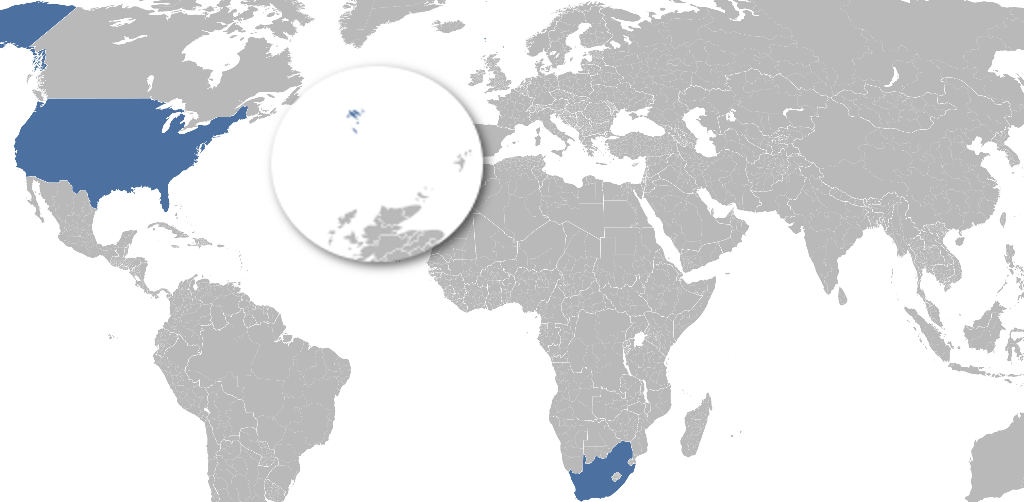
Case study 2 “Offshore macroalgae cultivation” will take place in the northern Atlantic with a focus on activities in the Faroe Islands. In addition, we will link to activities from universities and industries in South Africa and the United States (Maine).
CHALLENGES
- Upscale seaweed production in the Atlantic Ocean.
- Breeding is critical to increase the maximum yield in seaweed farms. Ocean Rainforest has managed to produce seeding material for >80 km growth line annually.
- Development of new technologies in order to reduce operating costs and take advantage of economies of scale. To develop the necessary equipment and vessels, capital investment is needed, yet the industry is currently competing for investors instead of customers, as the market is still immature.
- Legislation and regulations were developed to fit finfish aquaculture, which is fundamentally different from seaweed farming.
- Biosecurity regulations in South Africa hamper seaweed inclusion in abalone feed.
EXPECTED RESULTS
- Optimised handling for seedling, deploy, and harvest seaweed lines to reduce operational cost.
- Identification of suitable sites suitable for large-scale kelp cultivation in the Atlantic Ocean.
- Map best cultivation sites for kelp in the Faroe Islands.
- To know the quality of macroalgae as feed for abalone.
EXPECTED USERS
- SMEs that would like to grow seaweed offshore.
- Government organisations that regulate macroalgae activities.
- Institutes researching macroalgae related topics.
- Small and medium-sized enterprises (SMEs) that farm abalone looking for alternative feed.
WORKPLAN
A series of trials will be run through the lifetime of AquaVitae. In the Faroe Islands, these will focus on optimised handling and re-use of aquaculture equipment.
We will also focus on commercial development of a rig system and producing commercial quantities of dried S. Latissima for abalone feed.
In US (Maine) and the entire Faroe Islands, suitable offshore areas for cultivation will be mapped.
TEAM
- Ocean Rainforest (Faroe Islands)
- MariFeed (South Africa)
- Fiskaaling AS (Faroe Islands)
- Rhodes University (South Africa)